
At Reliable Design-Build-Remodel, we often remind clients that a beautiful bathroom is only successful if it performs well behind the scenes. Bathrooms naturally collect moisture from showers, baths, and daily routines, and without proper humidity control, that moisture can lead to mold growth, peeling paint, damaged cabinetry, and even structural concerns over time. Understanding how to dehumidify a bathroom is one of the simplest ways to protect your investment while keeping your space comfortable and clean. Whether your bathroom is newly remodeled or decades old, managing humidity is essential for both durability and indoor air quality.
Why Is Bathroom Humidity a Problem in the First Place?
Bathrooms produce more humidity than any other room in the home because hot water releases large amounts of moisture into the air. When steam has nowhere to escape, it settles onto walls, mirrors, ceilings, and fixtures. Over time, trapped moisture penetrates grout lines, drywall, and trim materials, creating an ideal environment for mold and mildew. Excess humidity also causes paint to blister, wood to swell, and finishes to deteriorate faster than expected. In homes throughout Birmingham and surrounding areas, we frequently see bathrooms without adequate ventilation struggling with persistent condensation. Understanding how to dehumidify a bathroom begins with recognizing that moisture is unavoidable, but controlling where it goes makes all the difference.
What Is the Best Way to Dehumidify a Bathroom Every Day?
The most effective daily strategy combines ventilation, airflow, and consistent habits. Running a properly sized exhaust fan during showers and leaving it on for at least twenty minutes afterward allows humid air to exit the home instead of lingering inside. Opening the bathroom door slightly after bathing encourages cross-ventilation, helping moisture dissipate faster. Simple practices such as using cooler shower temperatures, wiping down wet surfaces, and hanging towels so they dry completely can significantly reduce humidity buildup. Many homeowners are surprised to learn that consistency matters more than expensive equipment. Small daily actions prevent moisture from accumulating and make long-term humidity control much easier.
Do Exhaust Fans Really Make a Difference?
Absolutely. A properly installed exhaust fan is the single most important tool when learning how to dehumidify a bathroom effectively. Unfortunately, many older homes either lack a fan altogether or have units that are undersized, noisy, or improperly vented into attics instead of outdoors. A quality exhaust fan removes humid air directly from the room and replaces it with drier air from adjacent spaces. Modern models operate quietly, include humidity sensors, and automatically turn on when moisture levels rise. During bathroom remodels, we often recommend upgrading to a fan rated appropriately for the room’s square footage and ceiling height. Proper installation is just as important as the fan itself, ensuring moisture is carried fully outside rather than redistributed within the home.
Can a Dehumidifier Help in a Bathroom?
Portable or whole-home dehumidifiers can be helpful, particularly in bathrooms that lack windows or struggle with persistent dampness. A small, bathroom-safe dehumidifier pulls excess moisture from the air and collects it in a reservoir or drains automatically. This solution works well in finished basements, interior bathrooms, or homes with naturally high humidity levels common in the Southeast. However, a dehumidifier should complement ventilation, not replace it. Without airflow, humidity tends to return quickly. When we evaluate bathrooms during renovation consultations, we often recommend combining mechanical ventilation, moisture-resistant materials, and supplemental dehumidification when needed. The goal is to create a balanced system that continuously manages moisture rather than fighting it temporarily.
What Remodeling Upgrades Help Control Bathroom Humidity Long-Term?
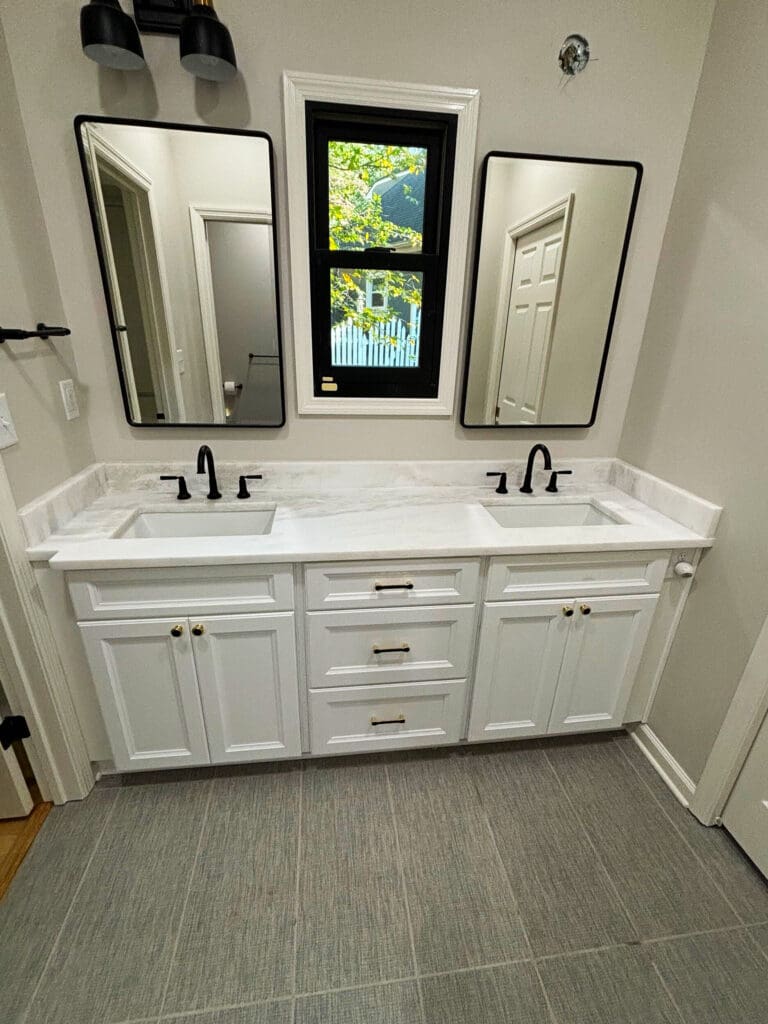
Some of the most effective humidity solutions are built directly into thoughtful bathroom design. Moisture-resistant drywall, properly sealed tile installations, waterproof shower systems, and high-quality grout all prevent water from penetrating surfaces. Upgrading to frameless glass shower enclosures reduces trapped steam compared to shower curtains, while larger layouts allow better airflow throughout the room. Heated floors and improved insulation can also minimize condensation by keeping surfaces warmer. During bathroom remodeling projects, we help homeowners plan for longevity by addressing ventilation pathways, material selections, and layout improvements that naturally reduce humidity issues. Investing in these upgrades during a renovation often prevents years of maintenance concerns later.
Are There Signs That a Bathroom Has Too Much Humidity?
Recognizing early warning signs can prevent costly repairs. Persistent fogged mirrors long after showers end, peeling paint on ceilings, musty odors, mildew spots on grout, and damp-feeling towels are all indicators of excess moisture. Condensation forming on walls or windows is another clear signal that humid air is not escaping properly. Left untreated, high humidity may eventually damage cabinetry, loosen flooring adhesives, or promote hidden mold growth behind walls. If these symptoms appear regularly, it may be time to evaluate ventilation performance or consider improvements. Knowing how to dehumidify a bathroom allows problems to be addressed proactively rather than reactively, protecting both comfort and home value.

Learning how to dehumidify a bathroom is less about a single product and more about creating a complete moisture-management strategy. Daily habits, effective exhaust ventilation, supplemental dehumidification, and smart remodeling decisions all work together to keep humidity under control. At Reliable Design-Build-Remodel, we believe a successful bathroom balances beauty with performance, ensuring that finishes last, air quality remains healthy, and maintenance stays manageable for years to come. If your bathroom struggles with lingering moisture or you are planning a renovation, addressing humidity from the start is one of the smartest investments you can make in your home.
Reliable Design-Build-Remodel is a full service general construction firm and remodeling contractor operating in the Birmingham metro and Jefferson and Shelby County areas and surrounding communities, including Birmingham, Helena, Chelsea, Mountain Brook, Hoover, Homewood, Montevallo, Alabaster, Vestavia Hills, and Pelham, with over 30 years of servicing our valued clients. Offering full service suite of general remodeling, design and build services. Our specialties include bathroom remodeling, kitchen remodeling, exterior renovations, interior renovations, painting, and more!
Visit us at reliablerem.com, and like and follow us on Facebook and Instagram!