At Reliable Design-Build-Remodel, we’ve helped countless Birmingham homeowners reimagine their bathrooms for both function and beauty. One growing trend we love recommending—especially in smaller spaces—is the curbless or zero-entry shower. These sleek designs offer not just a modern look but real advantages when space is tight. Below, we’ll walk through six of the most common questions we hear about installing a curbless shower in a small bathroom, and how to make the most of this elegant solution.
Are zero entry showers good for small bathrooms?
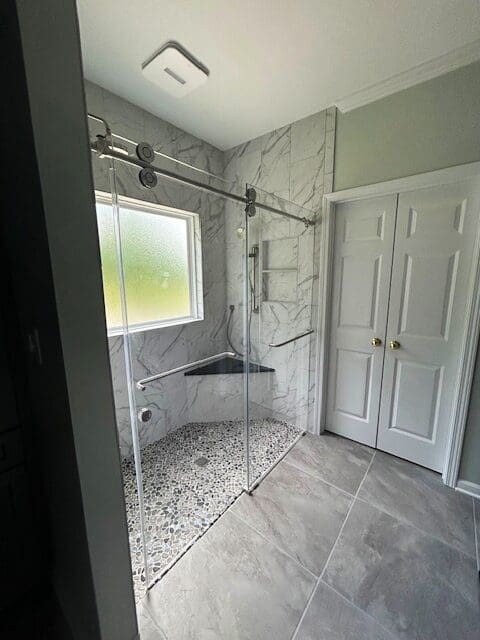
Yes, zero entry (or curbless) showers are excellent choices for small bathrooms. By eliminating the raised threshold or curb, you create a seamless transition between the bathroom floor and the shower. This design choice visually opens up the space, making the bathroom feel larger and more cohesive. Functionally, it also enhances accessibility—ideal for aging in place or multigenerational households. For small bathrooms where every inch counts, a curbless shower can remove unnecessary bulk and give the entire space a sleeker, more modern appearance. At Reliable, we often recommend this solution to homeowners looking to improve both usability and style in compact bathroom layouts.
How small can a curbless shower be?
While every bathroom is unique, a curbless shower can be designed to fit in surprisingly compact spaces. The smallest recommended size for a curbless shower is generally around 30 inches by 30 inches, which meets most local code requirements. However, we advise going slightly larger—ideally 36 inches by 36 inches—for greater comfort and practicality. With custom glass panels or smart tile layouts, a small curbless shower can feel far more spacious than a traditional setup. Our design team in Birmingham often gets creative with angled walls, niches, and linear drains to maximize both the square footage and the functionality of the smallest bathrooms.
What is the downside to curbless showers?
While curbless showers offer many benefits, they’re not without considerations. The biggest potential downside is water containment. Because there’s no raised edge to trap water, the slope of the floor and proper drainage become critical to prevent pooling or water escaping into other areas. This requires skilled installation and careful planning, which is why working with a professional remodeling company like Reliable is so important. Additionally, curbless showers can sometimes cost a bit more upfront due to the extra waterproofing and floor adjustments needed. But for most homeowners, especially those remodeling with long-term use in mind, the investment is well worth it.
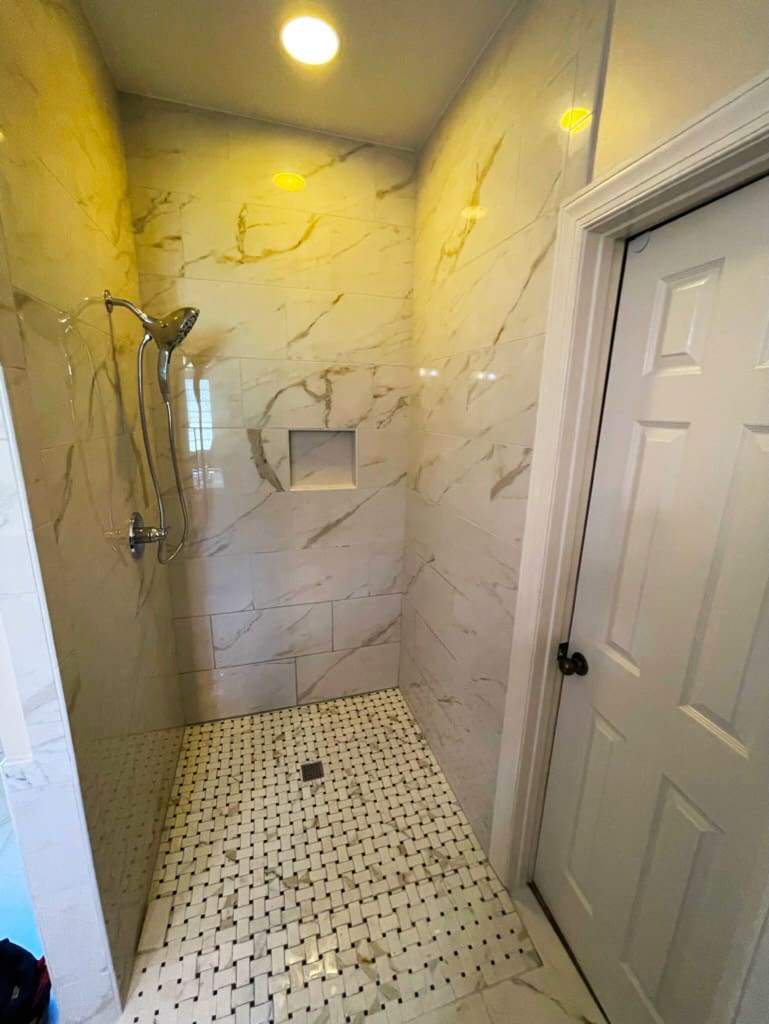
Can you put a doorless shower in a small bathroom?
Absolutely, and it can be a game changer for both aesthetics and spatial flow. Doorless curbless showers in small bathrooms create an uninterrupted visual field, which tricks the eye into thinking the space is larger than it actually is. That said, the design must be strategic to prevent overspray. A well-placed half-wall, fixed glass panel, or slightly deeper shower area can help contain water without needing a full door. At Reliable Design-Build-Remodel, we help clients design doorless curbless showers that not only save space but also elevate the bathroom with a spa-like, open feel—without compromising on function.
What type of shower is best for a small bathroom?
When remodeling a small bathroom, the best type of shower is one that prioritizes efficient use of space, accessibility, and clean design. A curbless walk-in shower checks all these boxes. It removes visual and physical barriers, helps reduce clutter, and gives you more flexibility with layout and design. Combining a curbless base with glass walls (or no walls at all) allows natural light to flow through the room, helping it feel more expansive. We often pair these with sleek fixtures and smart storage niches to keep everything accessible and out of the way. For Birmingham homeowners dealing with limited square footage, this shower style provides both elegance and everyday convenience.
What is the best shower shape for a small bathroom?
The ideal shower shape for a small bathroom often depends on the layout of the room, but generally speaking, rectangular or corner showers tend to work best. A rectangular curbless shower can run along one wall, making use of narrow dimensions without feeling cramped. Alternatively, a neo-angle or curved corner shower can maximize space in bathrooms with unconventional layouts. The goal is always to fit the shower naturally within the room’s footprint while maintaining flow and accessibility. At Reliable Design-Build-Remodel, we tailor each shower’s shape to our clients’ exact needs and bathroom configuration, making sure it enhances both comfort and design.

A curbless shower in a small bathroom isn’t just a design trend—it’s a smart, stylish, and highly functional solution. From visual space expansion to improved accessibility, the benefits far outweigh the challenges when done right. At Reliable, we specialize in helping Birmingham homeowners bring these visions to life with expert design, quality craftsmanship, and thoughtful planning every step of the way. If you’re considering a bathroom remodel and want to explore how a curbless shower could transform your space, we’d be honored to help you build a bathroom that works beautifully—no matter the size.
Reliable Design-Build-Remodel is a full service general construction firm and remodeling contractor operating in the Birmingham metro and Jefferson and Shelby County areas and surrounding communities, including Birmingham, Helena, Chelsea, Mountain Brook, Hoover, Homewood, Montevallo, Alabaster, Vestavia Hills, and Pelham, with over 30 years of servicing our valued clients. Offering full service suite of general remodeling, design and build services. Our specialties include bathroom remodeling, kitchen remodeling, exterior renovations, interior renovations, painting, and more!
Visit us at reliablerem.com, and like and follow us on Facebook and Instagram!