At Reliable Design-Build-Remodel, we understand that screws are the unsung heroes of the construction industry. These small yet mighty fasteners play a crucial role in holding everything together, from building frames to cabinets. In this guide, we’ll explore a wide variety of screws, explaining what they are and why they are used. We’ll also provide a basic pros and cons section for each type to help you make informed choices in your construction projects.
Screws vs. Bolts: Understanding the Differences
While screws and bolts are often used interchangeably in everyday conversation, they serve distinct purposes in construction and manufacturing.
Screws:
- Screws have threads that extend along the entire length of the shaft.
- They are designed to create their own threads in the material they are inserted into.
- Screws are typically used to fasten materials together by creating a secure, threaded connection.
- They often feature a pointed tip to initiate the threading process.
Bolts:
- Bolts have threads on only a portion of their shaft.
- They require pre-existing, complementary threads in the material they are used with, such as nuts or tapped holes.
- Bolts are typically used in conjunction with nuts to create a clamping force or to secure components.
- They usually have a flat or rounded end without a pointed tip.
There are many different types of screws and bolts, and we’re going to go over the many different types here:
1. Masonry Screws
Usage: Masonry screws are designed for fastening objects to concrete, brick, or stone surfaces. They provide strong, durable connections.

Pros:
- Excellent for heavy-duty applications.
- No need for anchors or plugs.
- Resistant to vibration.
Cons:
- Requires pre-drilling in hard materials.
2. Wood Screws
Usage: Wood screws are ideal for woodworking and attaching wooden components. They come in various styles for specific applications.

Pros:
- Strong grip in wood.
- Various head types for different needs.
- Easy to countersink.
Pros:
- Strong grip in wood.
- Various head types for different needs.
- Easy to countersink.
3. Drywall Screws
Usage: Drywall screws are specifically designed for fastening drywall sheets to studs or metal framing.

Pros:
- Sharp, fine threads for easy penetration.
- Reduces the risk of “popping.”
- Designed to prevent over-tightening
Pros:
- Not suitable for load-bearing applications
4. Decking Screws
Usage: Decking screws are corrosion-resistant and used for attaching decking boards to substructures.

Pros:
- Resistant to rust and corrosion.
- Self-drilling design.
- Available with square or star drive for better torque.
Cons:
- Can be expensive
5. MDF Screws
Usage: Medium Density Fiberboard (MDF) screws are designed for use with MDF and other engineered wood products.

Pros:
- Prevents splitting in MDF.
- Coarse threads for secure grip.
- Reduces the need for pre-drilling.
Cons:
- May not work well with hardwood.
6. Sheet Metal Screws
Usage: Sheet metal screws are intended for fastening thin metal sheets and are self-tapping.

Pros:
- Self-drilling and self-tapping.
- Designed for metal-to-metal applications.
- Available in various head styles.
Cons:
- May not hold well in thicker materials.
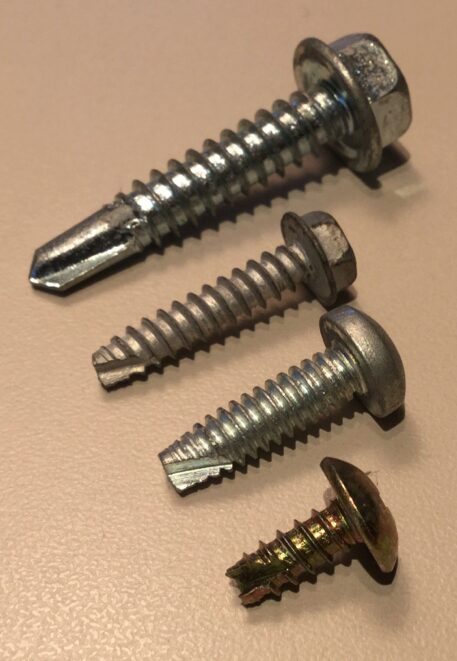
7. Self-Tapping Screws
Usage: Self-tapping screws have a sharp point and are used for drilling their own holes in materials like metal, plastic, and wood.
Pros:
- Reduces the need for pre-drilling.
- Excellent for quick assembly.
- Suitable for a wide range of materials.
Cons:
- May strip or break in hard materials.
8. Double-Ended Screws
Usage: Double-ended screws have threads at both ends, making them suitable for connecting two components or materials.

Pros:
- Provides a strong connection between two objects.
- Saves time on installation.
- Suitable for temporary connections.
Cons:
- Limited to specific applications.
9. Mirror Screws
Usage: Mirror screws are used to hang mirrors securely and can support heavy loads.

Pros:
- Designed for mirror installations.
- Decorative covers for aesthetics.
- Strong and durable.
Cons:
- Limited to mirror applications.
10. Security Screws
Usage: Security screws are tamper-resistant and designed to prevent unauthorized removal.

Pros:
- High security and tamper-proof.
- Various unique drive styles.
- Ideal for protecting valuable assets.
Cons:
- Special tools required for removal.
11. Hammer-Drive Screws
Usage: Hammer-drive screws are used in concrete and metal, relying on impact for installation.

Pros:
- No need for drilling or anchors.
- Fast and easy installation.
- Provides a secure connection.
Cons:
- Limited to specific applications.
12. Machine Screws
Usage: Machine screws are used with nuts or tapped holes and are commonly found in appliances and machinery.

Pros:
- Precise and secure fastening.
- Available in various head styles.
- Suitable for threaded holes.
Cons:
- Require nuts for tightening.
13. Pocket Hole Screws
Usage: Pocket hole screws are designed for use with pocket hole joinery systems and are commonly used in cabinetry and furniture making.

Pros:
- Creates strong, hidden joints.
- Quick and efficient assembly.
- Minimal visible fasteners.
Cons:
- Limited to specific joinery methods.
14. Thread-Cutting Machine Screws
Usage: Thread-cutting machine screws are used in metal applications to cut threads into the material as they are tightened.

Pros:
- Creates threads in unthreaded holes.
- Suitable for metal-to-metal connections.
- Strong and durable.
Cons:
- May require pre-drilled holes.
15. Hex Bolts
Usage: Hex bolts, with their hexagonal heads, are used for a wide range of applications and are often paired with nuts for added security.

Pros:
- High tensile strength.
- Suitable for heavy-duty applications.
- Provides a secure connection.
Cons:
- Require nuts for tightening.
16. Carriage Bolts
Usage: Carriage bolts, also known as coach bolts, are commonly used in woodworking and are known for their round, smooth heads.

Pros:
- Resistant to tampering.
- Smooth, round head for a finished look.
- Suitable for wooden applications.
Cons:
- Limited to specific woodworking applications.
17. Lag Bolts
Usage: Lag bolts are heavy-duty with coarse threads, often used for attaching heavy objects to wood.

Pros:
- High shear strength.
- Excellent for load-bearing applications.
- Strong and durable.
Cons:
- Require pre-drilling in hardwood.
18. Socket Screws
Usage: Socket screws, also known as Allen or hex socket screws, have a unique drive style and are used in a wide range of applications.

Pros:
- High torque capabilities.
- Compact head for tight spaces.
- Resistant to tampering.
Cons:
- Require a special tool for tightening.
19. Set Screws
Usage: Set screws are used to secure one object within or against another object, often without a visible head.

Pros:
- Provides a flush, hidden connection.
- Suitable for fine-tuning and adjustments.
- Resistant to tampering.
Cons:
- Limited to specific applications.
20. Eye Bolts
Usage: Eye bolts have a looped head and are used for attaching cables, ropes, or hooks for lifting or securing objects.

Pros:
- Ideal for lifting and rigging applications.
- Provides a secure anchor point.
- Available in various sizes and load capacities.
Cons:
- Limited to applications requiring an attachment point.
21. Eye Lags
Usage: Eye lags are similar to eye bolts, but have a lag screw thread for easy installation into wood.

Pros:
- Suitable for hanging lightweight objects.
- Easy installation in wood.
- Provides a secure attachment point.
Cons:
- Limited to wood applications.
22. J Bolts
Usage: J bolts have a J-shaped hook at one end and are commonly used for anchoring and securing cables and wires.

Pros:
- Provides a secure anchor point.
- Suitable for cable and wire management.
- Resistant to vibration.
Cons:
- Limited to specific applications.
23. U Bolts
Usage: U bolts have a U-shaped design and are used to secure pipes, conduit, and other cylindrical objects.

Pros:
- Provides a secure anchor for cylindrical objects.
- Easy installation.
- Resistant to corrosion.
Cons:
- Limited to securing cylindrical objects.
24. Shoulder Bolts
Usage: Shoulder bolts have a smooth, unthreaded section between the head and threads, making them suitable for precision applications.

Pros:
- Precise and accurate fastening.
- Allows for controlled movement.
- Suitable for machinery and equipment.
Cons:
- Limited to precision applications.
25. Elevator Bolts
Usage: Elevator bolts, with their flat, countersunk heads, are commonly used in conveyor systems and grain handling equipment.

Pros:
- Flush, smooth head for reduced risk of damage.
- Ideal for conveying systems.
- Provides a secure connection.
Cons:
- Limited to specific applications.
26. Sex Bolts
Usage: Sex bolts, also known as barrel or binding post bolts, consist of a male and female component and are used for assembly and disassembly.

Pros:
- Allows for easy assembly and disassembly.
- Provides a clean, finished look.
- Suitable for various materials.
Cons:
- Requires both male and female components.
27. Mating Screws
Usage: Mating screws are used to connect two parts with threaded holes, providing a secure fastening solution.

Pros:
- Creates a strong connection between two parts.
- Ideal for joining components.
- Resistant to vibration.
Cons:
- Requires threaded holes in both parts.
28. Hanger Bolts
Usage: Hanger bolts have threads at both ends, with one end designed for wood and the other for a machine thread.

Pros:
- Versatile for wood-to-metal connections.
- Provides a strong and secure joint.
- Suitable for suspending items.
Cons:
- Limited to specific applications.
Choosing the right type of screw or bolt is essential for the success and durability of your construction projects. Each type offers unique advantages and disadvantages, making it crucial to match the fastener to the specific needs of your project.
Reliable Design-Build-Remodel is a full service general construction firm and remodeling contractor operating in the Birmingham metro and Jefferson and Shelby County areas and surrounding communities, including Birmingham, Helena, Chelsea, Mountain Brook, Hoover, Homewood, Montevallo, Alabaster, Vestavia Hills, and Pelham, with over 30 years of servicing our valued clients. Offering full service suite of general remodeling, design and build services. Our specialties include bathroom remodeling, kitchen remodeling, exterior renovations, interior renovations, painting, and more!
Visit us at reliablerem.com, and like and follow us on Facebook and Instagram!