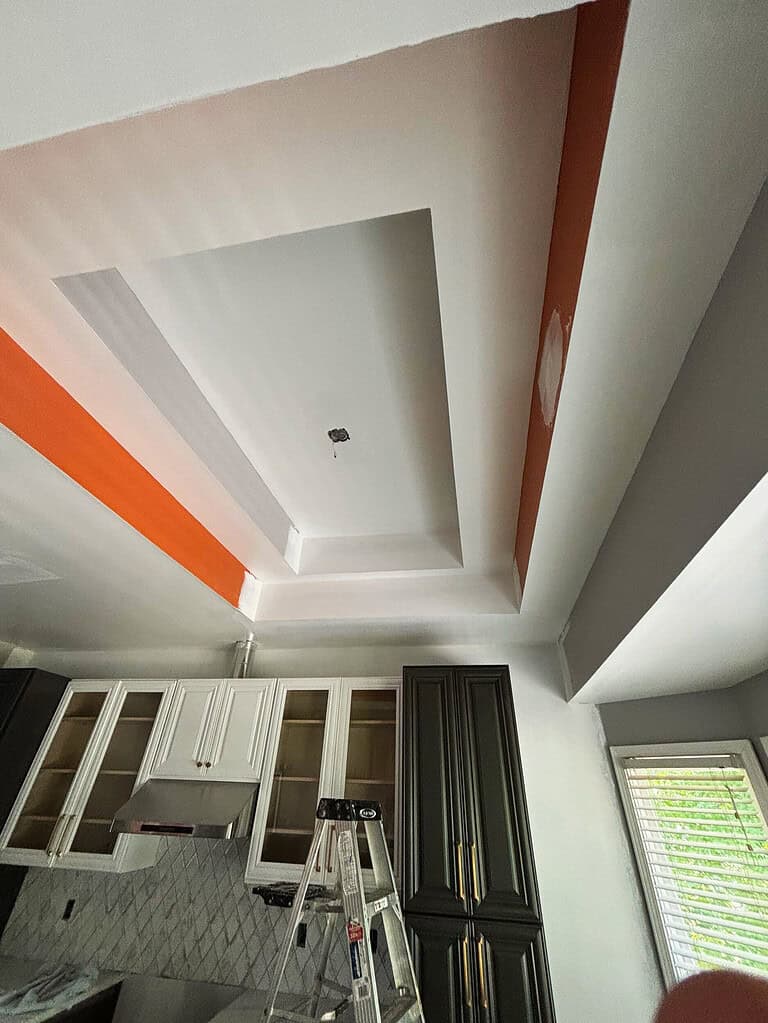
Ceilings are often called the fifth wall, and a decorative ceiling treatment like a tray or coffered ceiling can add architectural elegance and a sense of custom craftsmanship to a room. These features draw the eye upward, add depth and character, and elevate a space from ordinary to refined. Whether you are building, remodeling, or simply want to add a special touch, a decorative ceiling can make a striking difference. At Reliable Design-Build-Remodel, we create tray, coffered, and beamed ceilings for families across the Birmingham area, and here are some ideas to consider.
What is a tray ceiling?
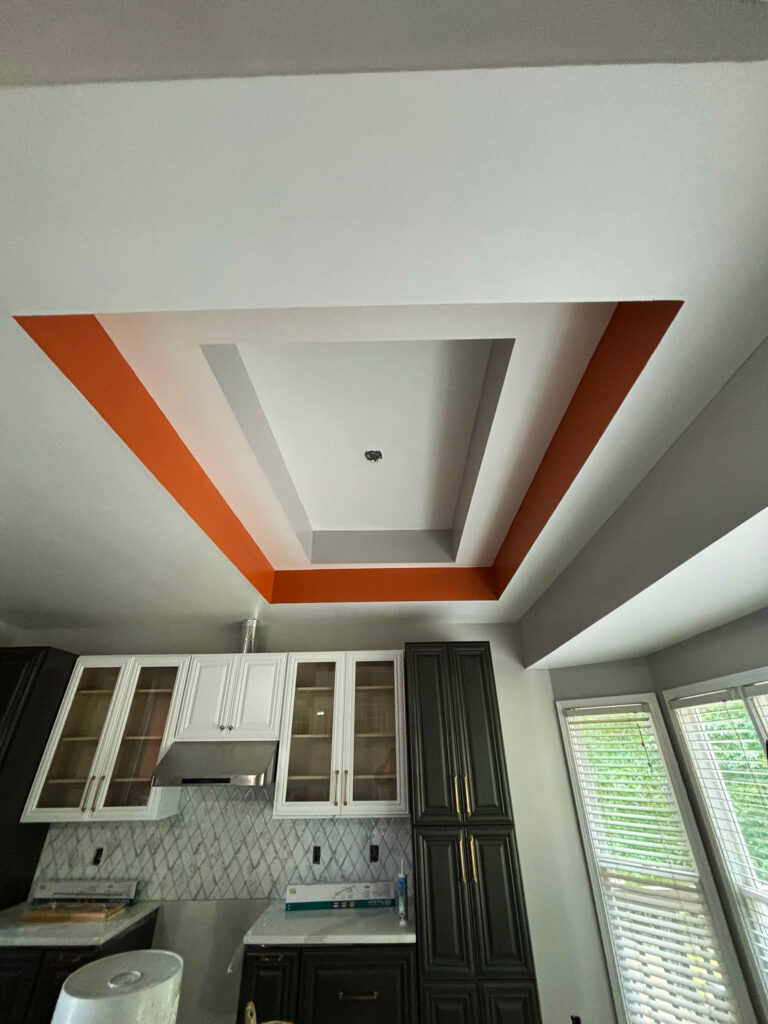
A tray ceiling, also called a recessed or inverted ceiling, is a ceiling that features a central section that is raised higher than the area around its perimeter, creating an effect like an inverted tray or a stepped recess. The border around the room is lower, while the middle steps up, adding height, depth, and visual interest to the ceiling. The transition between the levels can be simple or detailed with trim, molding, or even lighting tucked into the recess for a soft glow. Tray ceilings add a sense of volume and elegance to a room without the complexity of some other ceiling treatments, and they work beautifully in bedrooms, dining rooms, and living spaces. The raised center can make a room feel larger and more open. Tray ceilings range from subtle, single-step designs to more elaborate multi-level versions with decorative details. Because they add architectural interest and a custom feel, tray ceilings are a popular way to elevate a room. Understanding the tray ceiling as a recessed, stepped-up center is the starting point for considering it alongside other decorative ceiling options like coffered and beamed ceilings.
What is the difference between a tray, coffered, and beamed ceiling?
Tray, coffered, and beamed ceilings are all decorative ceiling treatments, but they create different looks. A tray ceiling features a raised central section surrounded by a lower perimeter, creating a stepped, recessed effect that adds height and elegance with relatively clean lines. A coffered ceiling consists of a grid of recessed panels, typically squares or rectangles, framed by beams or molding, creating a rich, dimensional, often formal look reminiscent of classic architecture; coffered ceilings add significant depth and craftsmanship. A beamed ceiling features exposed or decorative beams running across the ceiling, which can create a rustic, traditional, or even modern look depending on the style, adding warmth and architectural character. So a tray ceiling is about a recessed center, a coffered ceiling is about a grid of panels, and a beamed ceiling is about decorative beams. Each suits different styles and rooms, from the clean elegance of a tray to the formal richness of a coffered ceiling to the character of beams. The right choice depends on your home’s style and the effect you want. We help families choose and design the ceiling treatment that best fits their space and aesthetic.
Which rooms work best for a decorative ceiling?
Decorative ceilings can enhance many rooms, and certain spaces are especially well-suited to them. The master bedroom is a popular choice, where a tray ceiling adds a sense of elegance and retreat to a personal space. Dining rooms are classic candidates, where a coffered or tray ceiling adds formality and a special, dressed-up feel for gatherings. Living rooms and great rooms benefit from decorative ceilings that add architectural interest to the main gathering space, with coffered ceilings or beams making a strong statement in larger rooms. Entryways and foyers can use a decorative ceiling to create an impressive first impression. Studies, libraries, and offices suit the rich, traditional feel of coffered ceilings or beams. Generally, rooms where you want to add elegance, character, or a focal point are good candidates, and rooms with adequate ceiling height work best, since some treatments lower the perimeter or add depth. The room’s style and proportions guide which treatment fits. We help families decide which rooms will benefit most and which ceiling treatment suits each space, so the feature enhances the room rather than overwhelming it.
What does it take to add a tray or coffered ceiling?
Adding a tray, coffered, or beamed ceiling involves carpentry and finishing work, and the scope depends on the treatment and whether it is part of new construction or a remodel. A tray ceiling is created by building the recessed, stepped structure, which is most easily done during construction or a renovation when the ceiling is being worked on, though it can sometimes be added to an existing ceiling depending on the space above. A coffered ceiling is built by installing a grid of beams or molding to create the recessed panels, which is detailed finish carpentry that requires precision for a clean, even result. A beamed ceiling involves installing real or decorative beams, which can range from structural timbers to lighter decorative beams attached to the ceiling. All of these require careful measurement, quality materials, and skilled craftsmanship for a polished result, and they may involve considerations like the space above the ceiling, lighting integration, and matching the home’s trim. Because these are custom features where precision shows, they are best done by experienced professionals. We design and build decorative ceilings to a high standard, handling the carpentry and finishing so the result is beautiful, even, and a true architectural enhancement.
Do decorative ceilings add value to your home?
Decorative ceilings generally add value to a home by enhancing its architectural character and giving rooms a custom, high-end feel that buyers notice and appreciate. Features like tray, coffered, and beamed ceilings read as quality craftsmanship and thoughtful design, elevating a home above standard flat-ceiling construction. They can make rooms feel more elegant, finished, and special, which contributes to a home’s appeal. The value depends on quality and appropriateness; a well-executed ceiling treatment that suits the room and the home’s style adds more than an overdone or poorly built one, and these features tend to have the most impact in the rooms where buyers expect a touch of luxury, like master bedrooms, dining rooms, and main living spaces. As with many custom features, decorative ceilings are often added primarily for the daily enjoyment of a more beautiful, characterful home, with added appeal as a bonus. Because they are a permanent architectural feature, quality construction matters. As a licensed general contractor, we create decorative ceilings that enhance both the beauty of a home and its long-term appeal, adding craftsmanship that homeowners enjoy every day.

Reliable Design-Build-Remodel is a full service general construction firm and remodeling contractor operating in the Birmingham metro and Jefferson and Shelby County areas and surrounding communities, including Birmingham, Helena, Chelsea, Mountain Brook, Hoover, Homewood, Montevallo, Alabaster, Vestavia Hills, and Pelham, with over 30 years of servicing our valued clients. Offering full service suite of general remodeling, design and build services. Our specialties include bathroom remodeling, kitchen remodeling, exterior renovations, interior renovations, painting, and more!
Visit us at reliablerem.com, and like and follow us on Facebook and Instagram!